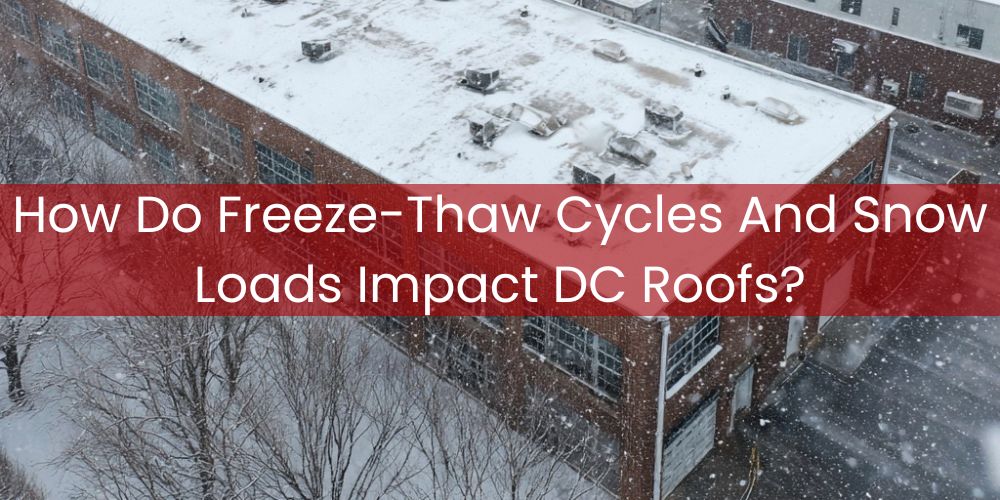
Freeze–thaw cycles and snow loads in Washington DC place repeated stress on commercial roof membranes, flashings, and drainage components, making proactive maintenance essential to prevent water intrusion and performance degradation. DC’s winter conditions, which include temperature fluctuations around freezing and periodic snowfall, create challenging conditions for flat and low-slope commercial roofs where moisture can persist on the roof surface. As water repeatedly freezes and thaws at seams, penetrations, and perimeter details, it can accelerate membrane fatigue, sealant deterioration, and flashing movement, increasing the risk of leaks if not properly managed. These effects are often intensified when snow accumulation or ice restricts drainage, allowing meltwater to remain on the roof surface and prolong moisture exposure. Regular inspection, drainage maintenance, and attention to vulnerable roof details are critical to preserving roof service life and maintaining operational continuity for commercial buildings in Washington DC.
Commercial Roofing Washington DC provides professional commercial roofing systems designed to operate reliably under freeze–thaw cycles and snow load conditions across Washington DC and the Mid-Atlantic region. Seasonal temperature variation and winter precipitation place ongoing demands on commercial roof assemblies, requiring systems that can accommodate thermal movement, maintain waterproofing integrity, and manage moisture during cold-weather conditions. Our roofing services focus on material selection, detailing, and maintenance strategies that address freeze–thaw stress, prevent moisture intrusion, and ensure drainage performance remains effective throughout the winter season. This approach helps commercial buildings remain protected and operational during winter conditions common to DC and the Mid-Atlantic. Below, we explore these winter challenges in greater detail, outlining practical considerations and maintenance strategies tailored to Washington DC’s commercial roofing environment.
What Do Freeze–Thaw Cycles and Snow Loads Mean for Commercial Roofing Systems?
In commercial roofing, freeze–thaw cycles refer to the repeated freezing and thawing of moisture present at roof surfaces, seams, penetrations, and drainage points, while snow loads describe the accumulation of snow that affects drainage performance and surface conditions rather than structural capacity. In Washington DC and the Mid-Atlantic region, these conditions primarily impact roof membranes, flashings, sealants, and drainage systems, particularly on flat and low-slope commercial roofs. Understanding how freeze–thaw activity and winter precipitation interact with commercial roofing assemblies is essential for selecting appropriate systems and maintaining long-term waterproofing performance. Below are the key ways freeze–thaw cycles and snow conditions affect commercial roofing systems.
- Moisture Expansion at Seams, Penetrations, and Details
- Increased Risk of Water Intrusion During Thaw Periods
- Drainage Impairment From Snow and Ice Accumulation
- Accelerated Aging of Roofing Materials
- Importance of System Design and Ongoing Maintenance
1. Moisture Expansion at Seams, Penetrations, and Details
During freeze–thaw cycles, moisture that accumulates at seams, penetrations, perimeter edges, and flashing transitions is subjected to repeated freezing and thawing. When this moisture freezes, it expands, placing outward pressure on membrane laps, seam welds, sealants, and attachment interfaces. As temperatures rise, the ice melts and contracts, allowing small gaps or micro-movements to develop. Over repeated cycles, this process accelerates seam fatigue, weakens adhesion at flashing details, and increases stress at penetrations and terminations. In commercial roofing systems, these locations are inherently more vulnerable because they combine material transitions, movement, and exposure, making them the most common initiation points for winter-related leaks.
2. Increased Risk of Water Intrusion During Thaw Periods
Thaw periods present a heightened risk for water intrusion because melting snow and ice introduce large volumes of water onto the roof surface in a short time frame. Effective removal of this water depends entirely on drainage components functioning as intended. When drains, scuppers, or internal leaders are partially obstructed by ice, debris, or residual snow, meltwater can back up and migrate laterally across the roof surface. This prolonged exposure increases hydrostatic pressure at seams, penetrations, and flashing interfaces, particularly where freeze–thaw activity has already stressed materials. Even roofing systems that perform well under normal rainfall conditions can be compromised during thaw events if drainage is restricted.
3. Drainage Impairment From Snow and Ice Accumulation
While commercial roof structures are engineered to support anticipated snow loads, snow and ice accumulation can significantly impair drainage performance. Ice formation around drains, strainers, low points, and outlet openings can restrict water flow, preventing meltwater from exiting the roof efficiently. As a result, water may pond for extended periods, increasing membrane saturation and surface moisture exposure. This condition intensifies freeze–thaw stress by allowing water to repeatedly refreeze in place, accelerating wear at seams, laps, and low areas. Drainage impairment is one of the most critical contributors to winter-related roofing deterioration on flat and low-slope commercial roofs.
4. Accelerated Aging of Roofing Materials
Repeated exposure to freeze–thaw cycles can shorten the service life of commercial roofing materials by increasing fatigue at the molecular and assembly level. Membranes may lose flexibility, sealants can dry and crack, and flashing components can weaken as they are subjected to constant thermal movement and moisture exposure. Although commercial roofing materials are designed to tolerate temperature variation, persistent winter conditions amplify normal aging processes, especially where moisture is present. Roofing systems that lack sufficient flexibility or compatibility between components are more susceptible to accelerated degradation under these conditions, making material selection and detailing critical in freeze–thaw climates.
5. Importance of System Design and Ongoing Maintenance
Managing freeze–thaw and snow-related risk in commercial roofing depends primarily on proper system design and disciplined maintenance rather than structural reinforcement. Roofing systems must be designed to accommodate thermal movement, maintain continuous waterproofing at critical details, and ensure reliable drainage throughout winter conditions. Ongoing inspection and maintenance allow early identification of blocked drains, deteriorating sealants, stressed seams, and vulnerable flashing before leaks occur. Proactive maintenance interrupts the progression of freeze–thaw damage, helping preserve roof performance, avoid emergency repairs, and maintain operational continuity in commercial buildings.
Have a question about an upcoming project?
How Do Freeze–Thaw Cycles and Snow Loads Affect the Integrity of Commercial Roofs?
Freeze–thaw cycles and winter snow conditions affect commercial roofing systems primarily by stressing membranes, seams, flashings, and drainage components, rather than by compromising structural capacity. In Washington DC and the Mid-Atlantic region, repeated freezing and thawing of moisture at roof details, combined with snowmelt and restricted drainage, can accelerate material fatigue and increase the risk of water intrusion. Understanding how these conditions interact with commercial roof assemblies is essential to maintaining waterproofing integrity and long-term roof performance. The following factors explain how freeze–thaw activity and snow conditions impact commercial roofing systems.
- Freeze–Thaw Stress at Seams, Penetrations, and Roof Details
- Snowmelt and Drainage-Related Water Intrusion
- Drainage Impairment From Ice Formation
- Accelerated Material Fatigue and Aging
- Increased Importance of Inspection and Preventative Maintenance
1. Freeze–Thaw Stress at Seams, Penetrations, and Roof Details
Freeze–thaw stress develops when moisture collects at seams, penetrations, flashings, and termination points that are inherently exposed to movement and environmental stress. When temperatures drop below freezing, trapped moisture expands as it turns to ice, exerting outward pressure on seam welds, lap edges, sealants, and flashing interfaces. As temperatures rise, the ice melts and contracts, allowing slight shifts or loss of compression to occur at these junctions. Repeated cycling gradually weakens seam bonds, reduces sealant elasticity, and increases movement at flashing details. In commercial roofing systems, these areas combine material transitions, attachment points, and thermal movement, making them the most common locations for winter-initiated leaks.
2. Snowmelt and Drainage-Related Water Intrusion
Snowmelt introduces large volumes of water to commercial roof surfaces over relatively short periods, particularly during rapid temperature changes. Unlike rainfall, snowmelt can occur while portions of the drainage system remain obstructed by ice, reducing the roof’s ability to clear water efficiently. When meltwater cannot drain properly, it spreads laterally across the roof surface and accumulates at low points, seams, and penetrations. This prolonged exposure increases hydrostatic pressure against membrane laps and flashing interfaces, heightening the risk of water intrusion even where membranes are otherwise intact. Snowmelt events therefore represent one of the highest-risk periods for leak development on commercial roofs.
3. Drainage Impairment From Ice Formation
Ice formation around drains, scuppers, strainers, and internal leaders can severely restrict water flow on flat and low-slope commercial roofs. As water refreezes around drainage components, it reduces effective outlet capacity and allows moisture to remain on the roof surface for extended periods. Standing water that repeatedly freezes and thaws in place intensifies stress on membranes and seams, accelerating fatigue and surface deterioration. Drainage impairment also increases the likelihood that water will migrate toward vulnerable roof details, such as penetrations and perimeter edges. Maintaining drainage functionality is therefore a primary factor in limiting freeze–thaw damage during winter conditions.
4. Accelerated Material Fatigue and Aging
Repeated freeze–thaw exposure accelerates aging by subjecting roofing materials to constant thermal movement combined with persistent moisture exposure. Membranes may lose flexibility over time, sealants can dry and crack, and flashing components may weaken as they are repeatedly stressed. While commercial roofing materials are engineered to tolerate temperature variation, winter conditions amplify normal wear processes, particularly when moisture is present at critical details. Roofing systems that lack sufficient flexibility or use incompatible materials at transitions are more vulnerable to accelerated fatigue, making material selection, detailing, and compatibility essential considerations in freeze–thaw climates.
5. Increased Importance of Inspection and Preventative Maintenance
Freeze–thaw cycles and snow conditions significantly elevate the importance of structured inspection and preventative maintenance programs. Seasonal inspections allow early identification of blocked drains, ice-related damage, deteriorating sealants, stressed seams, and emerging membrane fatigue before leaks develop. Proactive maintenance enables targeted repairs during controlled conditions rather than emergency responses during active weather events. By interrupting the progression of freeze–thaw damage, preventative maintenance helps preserve waterproofing integrity, reduce operational disruption, and extend the service life of commercial roofing systems throughout winter seasons.
What Preventive Measures Protect Commercial Roofs in Washington DC From Freeze–Thaw Damage and Snow Conditions?
Protecting commercial roofs in Washington DC from freeze–thaw damage and winter snow conditions depends on moisture control, drainage reliability, material flexibility, and proactive inspection, rather than residential-style interventions. In the Mid-Atlantic climate, winter-related roofing failures are most often triggered by trapped moisture, restricted drainage, and repeated thermal cycling at roof details. The following preventive measures focus on mitigating those risks and preserving long-term roof performance.
- Seasonal Inspections Focused on Winter Risk Areas
- Drainage Maintenance and Ice Management
- Protection and Reinforcement of Seams and Flashing Details
- Use of Flexible, Climate-Appropriate Roofing Systems
- Proactive Maintenance Planning Rather Than Reactive Repairs
1. Seasonal Inspections Focused on Winter Risk Areas
Seasonal inspections are most effective when they are specifically structured around freeze–thaw exposure rather than general condition checks. Inspections should be scheduled before winter to confirm system readiness, during winter to monitor drainage and ice-related stress, and after winter to assess damage revealed by thaw cycles. Particular attention should be given to seams, membrane laps, penetrations, flashing interfaces, perimeter edges, and roof terminations, where moisture accumulation and thermal movement are most likely to occur. Early detection of seam fatigue, sealant hardening, or minor separation allows targeted repairs before repeated freeze–thaw cycles turn isolated defects into active leaks or widespread membrane failure.
2. Drainage Maintenance and Ice Management
Drainage performance is the primary determinant of winter roof reliability on flat and low-slope commercial buildings. Preventive maintenance includes clearing debris from drains, scuppers, and internal leaders, verifying that drain strainers are properly seated, and confirming that water flows freely during thaw conditions. Ice formation around drains and low points should be monitored, as restricted outlets can trap meltwater on the roof surface. Prolonged ponding during freezing conditions dramatically increases membrane stress and accelerates seam deterioration. Maintaining unobstructed drainage pathways reduces the duration and severity of moisture exposure during freeze–thaw events.
3. Protection and Reinforcement of Seams and Flashing Details
Seams and flashing details represent the most common points of winter-related failure on commercial roofs. These areas experience combined stresses from moisture exposure, thermal movement, and structural deflection. Preventive measures include inspecting seam welds or adhesive bonds for continuity, reinforcing flashing attachments where movement is present, and renewing sealants that have lost elasticity or adhesion. Special attention should be given to penetrations, curb transitions, and perimeter terminations, where differential movement between materials can open pathways for moisture during thaw periods. Maintaining watertight detailing at these locations significantly reduces freeze–thaw-related leak risk.
4. Use of Flexible, Climate-Appropriate Roofing Systems
Roofing systems in Washington DC and the Mid-Atlantic must be capable of accommodating repeated thermal movement without cracking, splitting, or loss of adhesion. Preventive strategies include selecting membranes that retain flexibility at low temperatures and detailing systems that allow controlled movement at seams and penetrations. Compatibility between membranes, flashings, adhesives, and sealants is critical, as mismatched materials are more likely to fail under thermal cycling. Material flexibility and system design, rather than insulation thickness or structural capacity, are the primary factors influencing freeze–thaw performance in commercial roofing systems.
5. Proactive Maintenance Planning Rather Than Reactive Repairs
Freeze–thaw damage often develops incrementally and may remain concealed until thaw periods expose weaknesses through leaks or interior staining. Proactive maintenance programs shift the focus from emergency response to planned intervention, allowing issues to be addressed before they disrupt building operations. Scheduled maintenance enables repairs to be completed under controlled conditions, improves budget predictability, and extends overall roof service life. For commercial buildings in Washington DC, proactive maintenance is essential to maintaining operational continuity and avoiding winter-related emergency repairs.
Need Commercial Roofing That Performs Under Freeze–Thaw Cycles and Snow Loads?
Roofing systems that are not designed for freeze–thaw conditions and snow loads are more likely to experience membrane fatigue, flashing failure, and moisture-related damage. Our commercial roofing services are tailored to help buildings withstand winter climate stress and maintain long-term performance. Contact Commercial Roofing Washington DC today to schedule commercial roofing services designed to operate reliably under freeze–thaw cycles and snow load conditions across Washington DC and the Mid-Atlantic region.