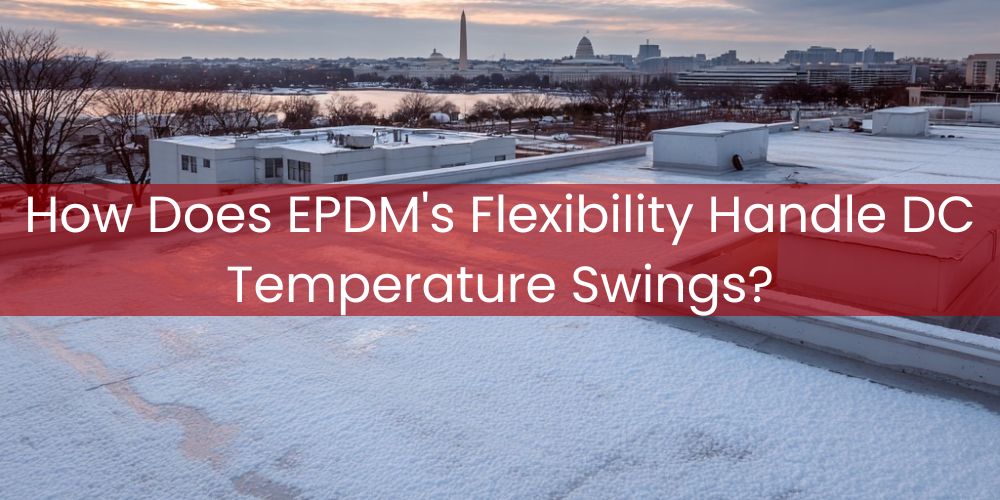
In Washington DC, EPDM roofing’s exceptional flexibility allows it to endure temperature swings, expanding and contracting without cracking, even as temperatures fluctuate dramatically between seasons. The Washington DC climate, known for its humid summers and chilly winters, pushes roofing materials to their limits with its significant temperature variations. EPDM roofing systems are specifically designed to maintain their integrity and performance despite these challenges, offering excellent durability and longevity for commercial buildings.
For commercial building owners and facility managers in Washington DC, understanding how EPDM handles temperature variations is vital for ensuring long-term roof performance and avoiding costly repairs. Commercial Roofing Washington DC provides professional EPDM commercial roofing services for buildings throughout Washington DC and the Mid-Atlantic region. Below, we will delve deeper into EPDM’s flexibility and its role in maintaining a resilient roofing system in DC’s variable climate.
What Makes EPDM an Ideal Choice for Commercial Roofing in DC's Climate?
EPDM is an ideal choice for commercial roofing in DC due to its exceptional durability and weather resistance. DC's climate sees a mix of hot summers, cold winters, and varying levels of precipitation, making it essential for roofing materials to adapt to these conditions. EPDM's flexibility and resilience to UV radiation, coupled with its energy efficiency, render it suitable for this region. The following list outlines the key reasons why EPDM is a favorable option for roofs in Washington, DC:
- Weather Resistance: Effectively withstands DC's diverse weather patterns, including snow and rain.
- UV Resistance: Maintains structural integrity despite prolonged sun exposure common in DC summers.
- Energy Efficiency: Helps reduce cooling costs through its reflective properties.
- Durability: Provides long-lasting protection in both harsh winters and hot summers.
- Flexibility: Adjusts well to temperature fluctuations, minimizing risk of cracking.
1. Weather Resistance: Effectively withstands DC's diverse weather patterns, including snow and rain.
Weather resistance refers to a material's capability to endure various climate conditions without failure. DC experiences significant weather changes with humid summers and snowy winters, which can challenge roof integrity. EPDM's ability to resist impacts from frequent rainfall and accumulating snow makes it an optimal choice there. This resistance ensures the roofing system will maintain its performance, reducing maintenance needs and preventing leaks or other moisture-related issues.
2. UV Resistance: Maintains structural integrity despite prolonged sun exposure common in DC summers.
UV resistance is the property of a material to withstand damage from ultraviolet radiation. In DC, summers are accompanied by considerable sunshine, which can degrade many roofing materials. EPDM's UV-resistant properties prevent deterioration from continuous sun exposure, safeguarding the roof. This resistance plays a critical role in prolonging the roof's lifespan, thereby maintaining the building's overall protection and reducing replacement costs.
3. Energy Efficiency: Helps reduce cooling costs through its reflective properties.
Energy efficiency in roofing refers to the ability to maintain comfortable indoor temperatures with minimal energy consumption. EPDM roofs can be treated to reflect UV rays, which helps lower the cooling load during DC’s hot summers. This reflective quality is critical for reducing air conditioning usage, leading to energy savings. By minimizing heat absorption, EPDM roofs contribute to decreased utility bills, making them economically sensible for DC's commercial spaces.
4. Durability: Provides long-lasting protection in both harsh winters and hot summers.
Durability is the ability of a material to remain functional over an extended period, despite environmental stresses. DC’s climate can be unpredictable, with shifts between snowy, icy winters and hot, stormy summers. EPDM is engineered to handle such variations without degrading, preserving the roof's integrity. Its durable nature implies fewer replacements and repairs, ensuring a cost-effective solution for commercial properties.
5. Flexibility: Adjusts well to temperature fluctuations, minimizing risk of cracking.
Flexibility in roofing materials allows them to bend and move without damage when subjected to changes in temperature. The ability of EPDM to flex with temperature shifts is crucial in DC, where thermal expansion and contraction can otherwise cause structural issues. This adaptability reduces stress on the roofing material, mitigating the potential for cracks, and thus extends the roof's functional life span.
Have a question about an upcoming project?
How Does EPDM Maintain Its Flexibility Amid DC's Temperature Variations?
EPDM maintains flexibility due to its molecular structure and material composition, ensuring performance across varying temperatures. The unique properties of EPDM, including UV resistance and elasticity, allow it to withstand the extremes of DC's climate. This durability makes it a preferred choice for commercial roofs, adapting well to heat, cold, and fluctuating weather conditions.
Below is a detailed list of factors contributing to EPDM’s outstanding flexibility, ordered by their significance:
- Molecular Structure: Keeps flexibility across wide temperature ranges.
- UV Resistance: Shields against direct sunlight, mitigating material degradation.
- Thermal Cycling Tolerance: Withstands frequent temperature fluctuations.
- Material Composition: EPDM composition provides inherent elasticity and resilience.
- Weather Resistance: Protects against moisture and climatic extremes in DC.
1. Molecular Structure: Keeps flexibility across wide temperature ranges.
Molecular structure refers to the arrangement of atoms within a material that determines its properties. The molecular structure of EPDM allows it to remain flexible even at extreme temperatures. This quality is especially important in DC, where seasonal temperature variations can be significant. The molecules are arranged in a way that they can stretch and contract without breaking, ensuring the roofing material stays intact and maintains its performance regardless of the weather changes.
2. UV Resistance: Shields against direct sunlight, mitigating material degradation.
UV resistance is the ability of a material to withstand degradation caused by ultraviolet radiation. EPDM's UV resistance contributes to its ability to maintain flexibility in DC's climate, protecting it from the harsh summer sun. This property reduces the rate of material breakdown, ensuring long-term elasticity and functionality. By reflecting or absorbing UV rays, EPDM minimizes temperature-induced stress on the roof, preserving its structural integrity over time.
3. Thermal Cycling Tolerance: Withstands frequent temperature fluctuations.
Thermal cycling tolerance refers to a material's capacity to endure repeated temperature shifts without losing performance. EPDM is particularly adept at handling the kind of temperature changes common in DC, where hot days can swiftly change to cooler nights. This ability helps maintain its shape and strength throughout various seasonal cycles. Its robustness in the face of thermal cycling ensures it remains a reliable barrier against any external elements or temperature-induced fatigue.
4. Material Composition: EPDM composition provides inherent elasticity and resilience.
Material composition describes the specific materials and their arrangement within a product. EPDM is composed of high-quality rubber polymer which grants it substantial elasticity and flexibility. This resiliency allows it to stretch, bend, and remain stable under physical stress exerted by environmental factors. Its composition is finely tuned to resist wear and tear, maintaining performance over the years despite the challenging weather conditions seen in the DC area.
5. Weather Resistance: Protects against moisture and climatic extremes in DC.
Weather resistance refers to the capacity of a material to withstand exposure to climatic elements without adverse effects. EPDM’s weather resistance is crucial in defending against the frequent rain and snow in DC, which could compromise lesser materials. By repelling moisture and resisting weather extremes, EPDM prevents the cracking or blistering often seen in traditional roofing. This comprehensive protection ensures the roof remains effective, contributing to the overall longevity and performance of the structure it covers.
What Are the Specific Benefits of EPDM Flexibility for Commercial Roof Longevity in DC?
EPDM's flexibility provides superior adaptability to temperature changes, enhancing durability in Washington, DC's distinct climate. EPDM (Ethylene Propylene Diene Monomer) is capable of withstanding the region's fluctuating temperatures, ensuring that the roofing material remains intact over time. This contributes significantly to the longevity and performance of commercial roofs in the area. Here are some specific benefits of EPDM's flexibility for enhancing commercial roof longevity in DC:
- Temperature Adaptability: Maintains integrity during DC's temperature changes and seasonal shifts.
- Elasticity: Expands and contracts without damage, avoiding common roofing failures.
- Seamless Installation: Fewer seams reduce potential leak points in the roofing structure.
- Weather Resilience: Withstands DC's wind, rain, and snow with minimal wear.
- Cost-effective Maintenance: Minimal repair needs due to superior material flexibility.
1. Temperature Adaptability: Maintains integrity during DC's temperature changes and seasonal shifts.
Temperature adaptability refers to a material's ability to cope with varying temperatures without degrading. In a climate like DC's, with significant temperature fluctuations, EPDM's adaptability is critical for reducing expansions and contractions that can cause material fatigue. This adaptability ensures the roof remains intact even during extreme temperature swings, maintaining the structure's longevity.
2. Elasticity: Expands and contracts without damage, avoiding common roofing failures.
Elasticity is the capacity of a material to resume its normal shape after bending or stretching. EPDM's elasticity enables it to expand and contract as needed as temperatures change in DC. This characteristic prevents typical damage like cracking or splitting, which often occurs with less malleable roofing materials, ultimately supporting a longer roof lifespan.
3. Seamless Installation: Fewer seams reduce potential leak points in the roofing structure.
Seamless installation refers to the minimized use of seams, which are typical weak points in roofing. EPDM sheets often come in large sizes, reducing the number of seams required. Fewer seams mean fewer opportunities for leaks, a significant benefit for maintaining the longevity of a roof in DC's variable climate.
4. Weather Resilience: Withstands DC's wind, rain, and snow with minimal wear.
Weather resilience is the ability of a material to endure adverse weather conditions. EPDM is naturally resistant to wind, rain, and snow — common weather elements in DC. Its resilience ensures minimal weather-induced wear and tear, supporting sustained roof performance over time.
5. Cost-effective Maintenance: Minimal repair needs due to superior material flexibility.
Cost-effective maintenance refers to reduced long-term costs associated with upkeep and repairs. Because of EPDM's flexibility, roofs experience fewer damages requiring repair. This results in lower maintenance costs over the roof's lifespan in a place like DC, where persistent environmental stress can lead to frequent upkeep for less resilient materials.