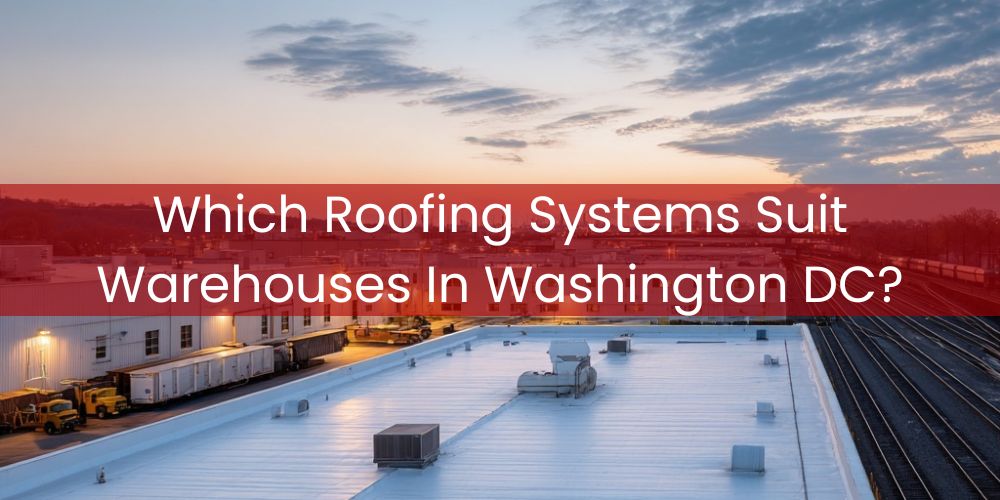
Warehouses in Washington DC are exposed to sustained thermal, moisture, and operational stresses that place unique demands on commercial roofing systems. Large, uninterrupted roof areas are subject to prolonged summer heat, which elevates roof surface temperatures and accelerates membrane aging, seam fatigue, and sealant deterioration. High humidity further increases moisture-related risk by slowing evaporation, encouraging condensation, and compounding the effects of minor defects around penetrations, joints, and drainage points. Without appropriate system selection and detailing, these conditions can significantly shorten roof service life and increase maintenance burden. Across Washington DC and the wider Mid-Atlantic region, warehouse roofs must also perform through heavy rainfall, seasonal storms, freeze–thaw cycles, and cold winter temperatures. These combined climate pressures place continuous strain on roof membranes, attachment systems, drainage layouts, and expansion allowances. Roofing systems that are not designed to manage thermal movement, moisture migration, and structural loading across wide roof spans are more likely to experience premature deterioration, drainage-related issues, and disruption to warehouse operations.
Commercial Roofing Washington DC provides commercial roofing services specifically designed for warehouses and industrial facilities throughout Washington DC and the Mid-Atlantic region. Our approach focuses on selecting roofing systems that perform reliably across large roof areas, accommodate thermal cycling, manage moisture effectively, and support the operational demands of warehouse buildings. Through climate-appropriate system selection, precise detailing, engineered drainage solutions, and proactive maintenance strategies, we help warehouse roofs perform predictably through DC’s seasonal extremes. For warehouse owners and facility managers in Washington DC, understanding how climate conditions and building use influence roofing performance is essential for protecting inventory, maintaining interior environmental control, and managing long-term operating costs. In this blog, we’ll examine which commercial roofing systems are best suited to warehouses in Washington DC, explain how climate and building function influence system performance, and outline practical considerations to support long-term roof reliability.
What are the key factors to consider when choosing a roofing system for warehouses in Washington DC?
When choosing a roofing system for warehouses in Washington DC, consider climate durability, energy efficiency, cost, regulatory standards, and maintenance needs. Washington DC's climate, with its mix of hot summers and cold winters, along with significant rainfall, necessitates a roofing system that efficiently handles these conditions. Additional elements like local building codes and long-term maintenance can also significantly impact the overall selection process. To effectively choose a suitable roofing system for warehouses in Washington DC, consider the following factors:
- Weather Resistance: Handles DC's variable climate of hot summers and cold winters.
- Energy Efficiency: Reduces energy costs with reflective materials fit for DC's climate.
- Cost-Effectiveness: Balances upfront costs with longevity and maintenance expenses.
- Compliance with Local Regulations: Adheres to Washington DC's building codes and standards.
- Maintenance Requirements: Aligns with available resources for ongoing care and repairs.
1. Weather Resistance: Handles DC's variable climate of hot summers and cold winters.
Weather resistance means the roofing system can withstand diverse climatic conditions without deteriorating quickly. Washington DC experiences both intense heat and cold, along with precipitation, necessitating robust roofing materials. A roof with good weather resistance can prevent leaks and structural damage, extending the roof's lifespan. This consideration is crucial for maintaining the integrity of the warehouse's internal environment, which is vital for stored goods and operational activities.
2. Energy Efficiency: Reduces energy costs with reflective materials fit for DC's climate.
Energy efficiency refers to the roof's ability to minimize energy consumption through temperature regulation. Using reflective roofing materials can help reduce energy costs in Washington DC's hot summers by reflecting sunlight. Efficient roofing can also provide insulation benefits during winter, further lowering energy bills. Choosing an energy-efficient roofing system supports sustainability goals and reduces the warehouse's carbon footprint.
3. Cost-Effectiveness: Balances upfront costs with longevity and maintenance expenses.
Cost-effectiveness assesses the financial balance of initial expenses against long-term savings. A roofing system for a warehouse should not only be affordable initially but also offer lasting value with minimal maintenance. Cost-effective solutions consider the total ownership cost, factoring in repairs, energy savings, and lifespan. Ensuring cost-effectiveness allows businesses to allocate resources effectively while achieving durable roofing solutions.
4. Compliance with Local Regulations: Adheres to Washington DC's building codes and standards.
Compliance means meeting all legal and safety standards set by local authorities. Washington DC has specific building codes and regulations that any roofing installation must adhere to. Non-compliance can result in fines or orders to alter the non-conforming roofing. Meeting these standards ensures the roof’s safety, legality, and functionality, avoiding potential legal and financial issues.
5. Maintenance Requirements: Aligns with available resources for ongoing care and repairs.
Maintenance requirements refer to the practices needed to keep the roof functional and in good condition. Every roofing system will require some level of upkeep to remain effective, but systems vary in their demands. Selecting a roof with manageable maintenance needs helps prevent unexpected costs and downtime. Proper planning for maintenance ensures the roof’s longevity and operational efficiency of the warehouse.
Have a question about an upcoming project?
How do different commercial roofing materials perform in Washington DC's climate?
In Washington DC's climate, commercial roofing materials need to address moderate rainfall, significant seasonal temperature variations, and occasional extreme weather events. Understanding the performance of various roofing options can help businesses choose materials with high durability and energy efficiency. The following list details important considerations for commercial roofing in Washington DC:
- Weather Resistance: Handles DC's moderate rainfall and occasional snowstorms effectively.
- Insulation Efficiency: Provides thermal efficiency against DC's seasonal temperature fluctuations.
- Durability: Can withstand Washington DC's humid summers and cold winters.
- UV Resistance: Protects against sun exposure to minimize heat absorption.
- Maintenance Requirements: Requires minimal upkeep despite climatic challenges.
1. Weather Resistance: Handles DC's moderate rainfall and occasional snowstorms effectively.
Weather resistance refers to a roofing material's ability to withstand varied weather conditions without degradation. In Washington DC, roofs must be able to deal with moderate rainfall and occasional snowstorms. Choosing materials with excellent weather resistance ensures fewer leaks and longer roof lifespans, critical for maintaining business operations without disruption. Additionally, roofs that efficiently manage precipitation can prevent moisture-related issues such as mold or structural damage.
2. Insulation Efficiency: Provides thermal efficiency against DC's seasonal temperature fluctuations.
Insulation efficiency refers to a material's ability to minimize heat transfer between the interior and exterior. Washington DC experiences hot summers and cold winters, making insulation efficiency paramount for energy conservation and comfort. Good insulation reduces heating and cooling costs, contributing to overall building efficiency. Moreover, materials with high insulation efficiency help maintain stable indoor temperatures, enhancing occupant comfort and productivity.
3. Durability: Can withstand Washington DC's humid summers and cold winters.
Durability is the measure of a roofing material's ability to resist wear and weathering over time. Washington DC's varying climate—humid summers and frigid winters—demands durable roofing solutions. Durable materials reduce the frequency of repairs and replacements, saving costs in the long run. They also contribute to building safety by providing reliable protection against harsh weather conditions.
4. UV Resistance: Protects against sun exposure to minimize heat absorption.
UV resistance in roofing materials means they can resist the damaging effects of ultraviolet rays. Washington DC's summers can be sunny, leading to increased roof temperatures and potential damage. UV-resistant materials help reduce heat absorption, lowering cooling costs and preventing rapid roof degradation. Furthermore, they contribute to the overall energy efficiency of buildings by maintaining lower temperatures on sunny days.
5. Maintenance Requirements: Requires minimal upkeep despite climatic challenges.
Maintenance requirements refer to the amount of care needed to keep a roof functional and effective. In Washington DC, roofs should require minimal maintenance to remain cost-effective and reliable amidst varying climate patterns. Materials with low maintenance needs reduce operational disruptions and costs by minimizing the need for frequent inspections and repairs. Choosing low-maintenance roofing options ensures businesses can focus on core operations with confidence in their building's integrity.
Which roofing systems offer the best long-term value for warehouse owners in Washington DC?
For warehouse owners in Washington DC, TPO and PVC roofing systems offer the best long-term value due to their durability, energy efficiency, and low maintenance costs. These roofing systems are well-suited to withstand the city's variable climate and help reduce energy consumption by reflecting sunlight. Considering the climate and operational demands of a warehouse, investing in these materials can result in significant cost savings and minimized repair needs over the years. Here are the top considerations for selecting a roofing system that provides the best value in Washington DC:
- Energy Efficiency: Reduces utility costs through high reflectivity and thermal insulation.
- Weather Resistance: Withstands DC's seasonal climate variations effectively.
- Low Maintenance: Minimizes upkeep requirements, reducing operational disruptions.
- Durability: Long-lasting resilience against environmental wear and tear.
- Cost-Effectiveness: Balances upfront costs with long-term savings and benefits.
1. Energy Efficiency: Reduces utility costs through high reflectivity and thermal insulation.
Energy efficiency refers to the roof's ability to reduce energy consumption by maintaining stable indoor temperatures. TPO and PVC roofing materials have reflective surfaces that lower the cooling load on HVAC systems, making them ideal for DC's summer and fluctuating temperatures. By investing in these systems, warehouse owners in Washington DC can significantly cut down on energy costs over time. Additionally, their ability to insulate against heat loss in colder months further cements their economic advantages. Choosing these energy-efficient options not only offers financial savings but also contributes to environmental sustainability by reducing the building's carbon footprint.
2. Weather Resistance: Withstands DC's seasonal climate variations effectively.
Weather resistance is the capacity of a roofing system to endure varying weather conditions without damage. In Washington DC, where seasons bring heat, rain, snow, and wind, a wind-resistant and waterproof roofing system is crucial. TPO and PVC roofs are engineered to function well under such conditions, providing long-lasting protection for warehouses. This resilience translates into fewer weather-related repairs and disruptions, allowing warehouse operations to continue smoothly year-round. The robustness against weather variations ensures the integrity of stored goods and reduces unexpected repair expenses.
3. Low Maintenance: Minimizes upkeep requirements, reducing operational disruptions.
Low maintenance means that the roofing system requires minimal intervention to retain its performance and appearance. In a busy setting like a warehouse, a low-maintenance roof can save significant time and resources spent on repairs and inspections. TPO and PVC roofs are resistant to dirt and biological growth, meaning less frequent cleaning is necessary. This quality is particularly beneficial for warehouse owners who prefer to allocate their resources towards business operations rather than frequent roof repairs. A low-maintenance roof ensures fewer disruptions and a longer service life, enhancing overall operational efficiency.
4. Durability: Long-lasting resilience against environmental wear and tear.
Durability refers to the roofing material's ability to withstand long-term exposure to environmental factors without degrading. In the context of Washington DC warehouses, durable roofs can tolerate the routine impact of UV exposure, precipitation, and temperature changes. TPO and PVC roofs are known for their high tensile strength, contributing to their longevity. This durability offers a greater return on investment by extending the roof's lifespan and delivering consistent protection for many years. Furthermore, choosing a durable roofing solution helps avoid frequent replacement cycles, thus preserving structural integrity and reducing landfill waste.
5. Cost-Effectiveness: Balances upfront costs with long-term savings and benefits.
Cost-effectiveness evaluates how well a roofing system delivers benefits concerning its purchase and installation costs. Though TPO and PVC roofs may have variable initial costs, their long-term advantages often outweigh the initial investments. These materials yield substantial savings through their energy efficiency, low maintenance needs, and durability. This balanced approach ensures that warehouse owners in Washington DC can spend wisely without sacrificing quality or performance. As a result, cost-effectiveness becomes an essential factor when considering the overall value and functionality of a roofing system.
Need Commercial Roofing Services for a Warehouse in Washington DC?
Warehouse roofs must perform reliably across large roof areas while managing heat, moisture, drainage, and seasonal temperature extremes. Commercial Roofing Washington DC provides commercial roofing services tailored specifically to warehouses and industrial facilities throughout Washington DC and the Mid-Atlantic region. Our team focuses on system selection, detailing, and maintenance strategies that support long-term performance, protect interior operations, and reduce unplanned disruption. Contact Commercial Roofing Washington DC to discuss commercial roofing solutions designed for warehouse buildings in Washington DC and the Mid-Atlantic region.