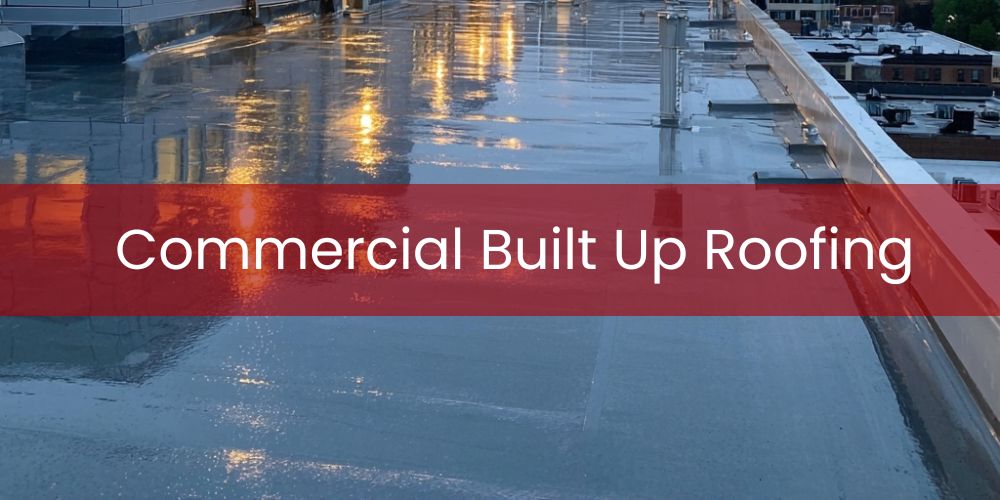
Commercial built-up roofing is a multi-layer roofing system constructed using alternating layers of bitumen and reinforcing felts to create a thick, durable, and redundant waterproof barrier. It is one of the most time-tested commercial roofing systems, valued for its long service life, resistance to heavy foot traffic, and ability to perform reliably under sustained moisture and temperature stress. Commercial Roofing Washington DC provides commercial built-up roofing services throughout Washington DC, including new BUR installations, repairs, restorations, and long-term maintenance planning for commercial and institutional properties.
Commercial built-up roofing (BUR) suits Washington DC's demands well due to its durability and ability to withstand the region's varying weather conditions, including its hot, humid summers and cold, snowy winters. BUR systems are robust, offering excellent waterproofing properties and resistance to the thermal expansion and contraction that characterize the seasonal temperature shifts in Washington DC. Additionally, its layered construction provides excellent insulation, contributing to energy efficiency and reducing overall heating and cooling costs for commercial buildings in the area.
For building owners and managers in Washington DC, selecting an appropriate roofing system is vital to ensuring the long-term integrity and performance of their properties. Below, we’ll dive deeper into the unique benefits of built-up roofing, explore how it meets the specific climatic challenges of Washington DC, and provide insights into maintenance and installation considerations.
What Are the Key Characteristics of Commercial Built-Up Roofing in Washington DC?
Commercial built-up roofing (BUR) is a multi-layer roofing system designed to deliver redundancy, durability, and long-term waterproofing on flat and low-slope commercial roofs. In Washington DC, where commercial roofs are exposed to heavy rainfall, seasonal temperature swings, rooftop foot traffic, and aging building stock, BUR remains relevant for specific applications. Its layered construction, repairability, and proven performance make it well-suited to certain commercial environments despite the rise of single-ply systems.
- Multi-Layer Redundancy for Long-Term Durability
- Proven Waterproofing Performance Under Heavy Rainfall
- High Tolerance for Rooftop Traffic and Equipment Loads
- Repairability and Phased Maintenance Advantages
- Thermal and Surface Protection Options for Urban Buildings
1. Multi-Layer Redundancy for Long-Term Durability
Multi-layer redundancy refers to the way built-up roofing systems achieve durability by stacking alternating layers of bitumen and reinforcing fabrics. Unlike single-ply commercial roofing systems that depend on one membrane to remain intact, BUR systems distribute stress, wear, and impact across multiple layers. In Washington DC, where commercial roofs are exposed to seasonal thermal cycling, wind uplift at parapets, and routine foot traffic from maintenance crews, this redundancy significantly reduces the risk of catastrophic failure. If one layer is compromised, underlying layers continue to provide waterproofing, allowing issues to be detected and repaired before interior damage occurs. This layered defense is particularly valuable on older DC buildings where structural tolerances and rooftop usage demands are higher.
2. Proven Waterproofing Performance Under Heavy Rainfall
Proven waterproofing performance refers to a roofing system’s ability to resist water intrusion during sustained or repeated rain events. Built-up roofing achieves this through its continuous, reinforced membrane formed by overlapping bitumen layers. Washington DC experiences frequent rainfall, often in multi-day cycles where roofs may not fully dry between storms. BUR systems perform well in these conditions because water must penetrate several bonded layers before reaching insulation or decking. This makes BUR especially effective on commercial roofs with moderate slope and slower drainage, where thinner membranes may be more vulnerable to seam failure or material fatigue under prolonged moisture exposure.
3. High Tolerance for Rooftop Traffic and Equipment Loads
Tolerance for rooftop traffic refers to a roof’s ability to withstand repeated foot traffic, equipment movement, and localized loading without damage. Many commercial properties in Washington DC, including hospitals, government facilities, universities, and older office buildings, require frequent roof access for HVAC servicing, inspections, and upgrades. Built-up roofing systems are inherently robust, particularly when surfaced with aggregate or protected cap sheets, allowing them to handle traffic without the puncture risk associated with thinner single-ply membranes. This durability reduces the need for extensive walkway pads and lowers the likelihood of damage caused by routine building operations.
4. Repairability and Phased Maintenance Advantages
Repairability describes how easily localized damage can be addressed without disrupting the entire roofing system. Built-up roofing systems are well suited to phased maintenance because individual areas can be patched, reinforced, or resurfaced without removing large sections of the roof. In Washington DC, where commercial roofing projects are often constrained by budget cycles, permitting timelines, and occupied buildings, this flexibility is a major advantage. Facility managers can prioritize critical areas, extend service life incrementally, and plan capital expenditures more strategically rather than being forced into premature full replacement.
5. Thermal and Surface Protection Options for Urban Buildings
Thermal performance in built-up roofing is influenced by insulation design and surface treatments rather than the membrane alone. While traditional BUR surfaces are dark and absorb heat, DC commercial buildings frequently enhance BUR systems with reflective coatings or light-colored cap sheets to reduce solar heat gain. This is particularly important in dense urban environments like Washington DC, where rooftop temperatures can rise significantly due to heat island effects. By combining BUR’s structural durability with modern reflective surfacing, building owners can improve energy performance, reduce rooftop thermal stress, and extend membrane life without sacrificing the inherent advantages of a built-up system.
Have a question about an upcoming project?
How Does Washington DC’s Climate Impact the Performance of Built-Up Roofing?
Washington DC’s climate directly influences how built-up roofing systems age, perform, and fail over time. The region’s combination of hot, humid summers, heavy rainfall, freeze–thaw cycles, and winter snow loading places sustained stress on commercial roofing assemblies. Built-up roofing performs well in DC precisely because its multi-layer construction is designed to manage moisture, thermal movement, and long-term environmental exposure. The following factors explain how DC’s climate interacts with built-up roofing performance and why system design and maintenance are critical in this region.
- Weather Resistance Under Heavy Rainfall and Seasonal Storms
- Thermal Stability Through DC’s Seasonal Temperature Extremes
- Moisture Control in a High-Humidity Environment
- UV Protection During DC’s Intense Summer Sun Exposure
- Long-Term Durability in a Variable Urban Climate
1. Weather Resistance Under Heavy Rainfall and Seasonal Storms
Weather resistance in built-up roofing refers to the system’s capacity to maintain a continuous waterproof barrier during sustained rainfall, wind-driven storms, and delayed drainage conditions. Washington DC regularly experiences prolonged rain events where roofs may remain wet for extended periods, increasing hydrostatic pressure on seams, penetrations, and transitions. Built-up roofing systems mitigate this risk through multiple overlapping plies of bitumen and reinforcing felts, ensuring that water must breach several layers before reaching the roof deck. Even if surface damage occurs, underlying plies continue to provide protection, preventing immediate leaks and allowing time for controlled repairs. This redundancy is particularly valuable in DC, where storm intensity and frequency can overwhelm thinner, single-layer roofing systems.
2. Thermal Stability Through DC’s Seasonal Temperature Extremes
Thermal stability describes a roofing system’s ability to absorb and release heat-driven movement without cracking, splitting, or losing adhesion. Washington DC experiences wide seasonal temperature ranges, with hot summers and freezing winters that repeatedly expand and contract roofing materials. Built-up roofing manages this stress by dispersing movement across multiple bonded layers instead of concentrating it at seams or attachment points. The asphalt used in BUR systems exhibits viscoelastic behavior, allowing it to flex slightly under heat and re-solidify as temperatures drop. This controlled movement reduces fatigue damage over time and minimizes the risk of thermal cracking, a common failure mode in less forgiving roofing systems exposed to DC’s climate cycles.
3. Moisture Control in a High-Humidity Environment
Moisture control refers to limiting both liquid water intrusion and vapor migration within the roof assembly. Washington DC’s humid subtropical climate increases the risk of condensation forming within roofing systems, particularly during seasonal temperature swings when warm, moist air meets cooler roof surfaces. Built-up roofing systems slow vapor transmission by layering bituminous materials that resist moisture movement and eliminate direct pathways to insulation and decking. This design reduces internal blistering, delamination, and insulation saturation, all of which can compromise roof performance from below. Effective moisture control is critical in DC commercial buildings, where trapped moisture can go undetected for long periods and accelerate structural deterioration.
4. UV Protection During DC’s Intense Summer Sun Exposure
UV protection refers to shielding asphalt-based roofing materials from ultraviolet radiation that accelerates oxidation and material breakdown. Washington DC’s long summer days and high solar intensity expose commercial roofs to sustained UV stress, which can harden asphalt, reduce flexibility, and cause surface cracking if left unprotected. Built-up roofing systems address this through aggregate surfacing or the application of reflective coatings that block or reflect ultraviolet rays. This protection lowers surface temperatures, slows chemical aging, and preserves the elasticity of the underlying bitumen layers. By reducing UV-driven degradation, BUR systems maintain waterproofing performance and structural integrity longer in DC’s sun-intensive environment.
5. Long-Term Durability in a Variable Urban Climate
Durability in Washington DC’s climate refers to a roofing system’s ability to degrade gradually and predictably rather than fail suddenly. Built-up roofing systems are inherently designed for long-term resilience through layered construction that tolerates wear, localized damage, and environmental stress without immediate system-wide failure. In an urban environment where roofs must endure rain, heat, humidity, snow, freeze–thaw cycles, and regular rooftop access, this slow-failure profile is a significant advantage. Instead of requiring emergency replacement after isolated damage, BUR systems allow for targeted repairs and phased maintenance. This predictability enables DC commercial property owners to manage roofing costs strategically and extend service life across decades rather than reacting to premature failures.
When Does Built-Up Roofing Make Financial Sense in Washington DC?
Built-up roofing makes financial sense in Washington DC when long-term durability, predictable maintenance costs, and tolerance for the region’s climate outweigh higher upfront installation expenses. In dense urban environments like DC, roofing decisions are rarely based on material cost alone. Labor rates, access constraints, building occupancy, and lifecycle cost all play a major role. The following factors explain when BUR is a financially rational choice for commercial properties in Washington DC.
- Large Commercial Roofs Requiring Long Service Life
- Buildings With Heavy Rooftop Traffic and Equipment Loads
- Properties Where Phased Repairs Are Financially Advantageous
- Roofs Exposed to Prolonged Moisture and Slow Drying Conditions
- Long-Term Owners Prioritizing Lifecycle Cost Over Initial Price
1. Large Commercial Roofs Requiring Long Service Life
Built-up roofing makes the most financial sense on large commercial roof areas where long-term durability offsets higher upfront installation costs. In Washington DC, replacing expansive roof systems is particularly expensive due to union labor rates, strict permitting processes, disposal and landfill fees, and limited staging space in dense urban cores. BUR systems routinely achieve service lives of 25 to 40 years when properly installed and maintained, allowing capital costs to be spread over decades rather than compressed into shorter replacement cycles. For government facilities, hospitals, universities, and institutional buildings that are rarely sold and typically owner-operated, this long service horizon provides predictable budgeting and reduces exposure to repeated high-cost replacement events.
2. Buildings With Heavy Rooftop Traffic and Equipment Loads
Built-up roofing is especially cost-effective for commercial buildings that require frequent rooftop access for mechanical servicing, inspections, and infrastructure upgrades. In Washington DC, many properties host dense rooftop equipment layouts including HVAC units, telecom arrays, emergency generators, and security systems that demand regular technician access. BUR’s multi-layer construction, reinforced felts, and aggregate or cap sheet surfacing provide superior resistance to abrasion, point loading, and accidental damage from tools and foot traffic. By minimizing punctures, surface wear, and service-related membrane failures, BUR significantly reduces cumulative repair costs compared to thinner single-ply systems that often require supplemental walkway pads and frequent localized patching.
3. Properties Where Phased Repairs Are Financially Advantageous
Built-up roofing offers strong financial value for owners who need flexibility in capital planning and maintenance timing. In Washington DC, full roof replacement is often delayed by budget approvals, tenant occupancy constraints, historic building oversight, or regulatory review. BUR systems allow for localized repairs, reinforcement of high-stress zones, and phased rehabilitation without compromising the integrity of the overall roof system. This enables owners to manage roofing expenditures incrementally, reduce emergency repair spending, and maintain watertight performance while strategically deferring full replacement until it aligns with operational and financial priorities.
4. Roofs Exposed to Prolonged Moisture and Slow Drying Conditions
Washington DC’s humid subtropical climate creates prolonged wet conditions where commercial roofs may remain damp for extended periods after rainfall. Built-up roofing performs well in these environments because its multiple waterproofing layers provide redundancy against moisture intrusion. Even if surface damage occurs, underlying plies continue to protect insulation and decking from saturation. From a financial perspective, this reduces the likelihood of catastrophic leaks, mold development, interior finish damage, and tenant disruption. When downstream costs such as business interruption, remediation, and insurance claims are considered, BUR often delivers a lower total cost of ownership than systems that fail abruptly under sustained moisture exposure.
5. Long-Term Owners Prioritizing Lifecycle Cost Over Initial Price
Built-up roofing is most financially justified for owner-occupied buildings or properties held for long-term operation rather than near-term resale. In Washington DC, where commercial roof replacement costs remain consistently high, roofing systems that age slowly and predictably provide measurable economic advantages. BUR does not rely on a single waterproofing layer, so deterioration tends to be gradual rather than sudden. This allows owners to plan maintenance, schedule repairs proactively, and avoid premature replacement. Over the full lifecycle of the building, reduced failure risk, extended service life, and controlled maintenance costs frequently outperform lower-cost roofing options that require earlier, more disruptive, and more expensive replacement.
Need Help With Commercial Built Up Roofing In Washington DC?
If your building already has a built-up roof and you are dealing with leaks, aging materials, or increasing maintenance costs, our team can assess whether repair, restoration, or replacement is the most cost-effective path forward. If you are unsure about your roof’s condition or evaluating options for a long-term roofing system, we provide clear, honest guidance based on your building’s structure, usage, and budget. And if you simply want expert support from a contractor who understands DC’s climate, codes, and commercial roofing demands, Commercial Roofing Washington DC is ready to help you plan with confidence.