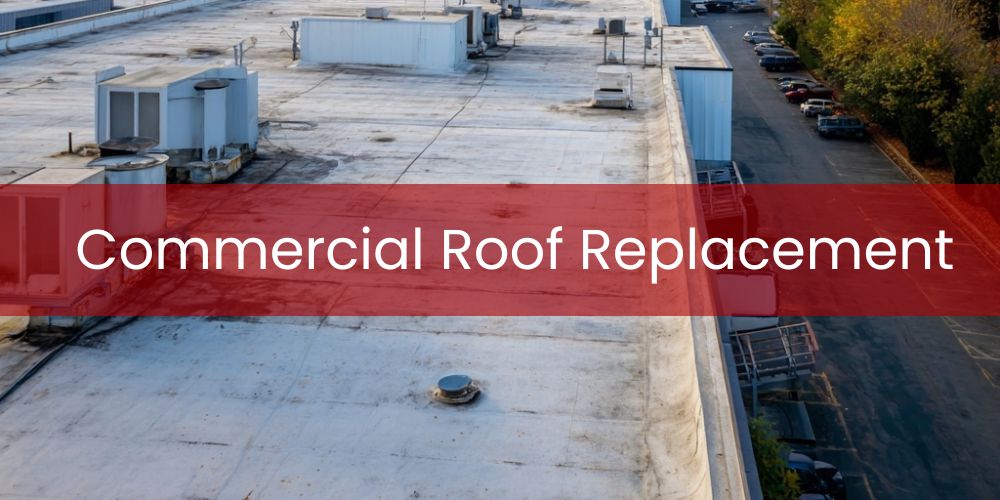
Commercial roof replacement involves removing an existing roofing system that has reached the end of its serviceable life and installing a new, fully engineered system designed to restore waterproofing, structural protection, and long-term performance. It is typically required when widespread deterioration, moisture saturation, or systemic failure makes continued repairs impractical or uneconomical. Commercial Roofing Washington DC provides commercial roof replacement services throughout Washington DC, delivering code-compliant, climate-appropriate roofing systems for offices, industrial buildings, government facilities, and multi-tenant commercial properties.
In Washington DC, key considerations for commercial roof replacement include understanding local building codes, selecting materials that endure varied weather conditions, and planning for potential disruption in a densely populated area. Due to DC's mix of historic and modern architecture, building codes can be strict, impacting both material choice and design flexibility. Additionally, Washington DC's climate, with its hot summers and cold winters, necessitates durable materials that can withstand temperature fluctuations, humidity, and precipitation throughout the year. For commercial building owners and facility managers in Washington DC, understanding these factors is crucial for a successful roof replacement project that meets compliance and ensures longevity. In this blog, we'll analyze each key consideration in detail, offering insights into local regulations, material suitability, and logistical planning for seamless roof replacement in the bustling DC environment.
What Climate Factors Can Cause Commercial Roof Replacement in Washington DC?
Commercial roof replacement in Washington DC is most often driven by cumulative climate-related stress rather than a single catastrophic failure. The region’s mix of heavy rainfall, high humidity, freeze–thaw cycles, summer heat, and occasional snow events accelerates material degradation across many commercial roofing systems. When these stresses exceed a roof’s ability to perform or be economically repaired, full replacement becomes the only viable option. The following climate factors are the most common reasons commercial roofs in Washington DC reach replacement condition.
- Prolonged Water Exposure and Moisture Saturation.
- Freeze–Thaw Cycling and Material Fatigue
- UV Exposure and Heat-Driven Aging
- High Humidity and Internal Moisture Accumulation
- Snow Loads and Winter Water Intrusion
1. Prolonged Water Exposure and Moisture Saturation
Prolonged water exposure occurs when repeated rainfall, ponding water, or persistent moisture overwhelms a roof’s waterproofing system. Washington DC receives consistent annual rainfall combined with periods of heavy downpours, which place sustained stress on flat and low-slope commercial roofs. Over time, water infiltrates through seams, flashings, or aged membranes, saturating insulation and compromising the roof assembly. Once insulation becomes waterlogged, thermal performance collapses and leaks become widespread and unpredictable. At this stage, localized repairs are no longer effective, and roof replacement is required to remove saturated materials and restore system integrity.
2. Freeze–Thaw Cycling and Material Fatigue
Freeze–thaw cycling refers to repeated freezing and thawing of trapped moisture within roofing materials. In Washington DC, winter temperatures frequently cross above and below freezing, allowing water that has entered the roof system to expand and contract repeatedly. This cycle accelerates cracking, seam separation, and membrane fatigue, particularly in aging roofs. Over multiple winters, the structural integrity of the roofing system degrades beyond repairable limits. When freeze–thaw damage becomes systemic rather than isolated, replacement is necessary to prevent ongoing water intrusion and structural risk.
3. UV Exposure and Heat-Driven Aging
UV exposure and sustained heat cause chemical breakdown and embrittlement of roofing materials over time. Washington DC experiences long summer periods with high solar exposure, which accelerates oxidation, surface cracking, and loss of flexibility in many commercial roofing systems. As materials age under UV stress, they lose elasticity and resistance to thermal movement. Once a roof becomes brittle, even minor movement or weather events can cause widespread failure. When UV degradation affects the majority of the roof surface, replacement becomes more cost-effective than continuous patching.
4. High Humidity and Internal Moisture Accumulation
High humidity contributes to moisture accumulation within roofing assemblies even in the absence of visible leaks. Washington DC’s humid climate increases vapor drive, allowing moisture to migrate into roof systems through condensation and diffusion. Over time, this internal moisture leads to insulation degradation, corrosion of metal components, and microbial growth. Because this type of damage often spreads invisibly, roofs may appear intact while failing internally. Once moisture contamination is widespread, replacement is required to remove compromised materials and prevent long-term structural and indoor air quality issues.
5. Snow Loads and Winter Water Intrusion
Snow loads and snowmelt introduce additional weight and water exposure that accelerate roof failure. Although DC is not a heavy-snow region every year, periodic snow events followed by rapid melting create dangerous conditions for commercial roofs. Accumulated snow adds structural load, while meltwater exploits weaknesses in membranes, seams, and drainage systems. Repeated winter seasons with poor drainage or existing vulnerabilities lead to progressive damage that shortens roof lifespan. When winter-related stress results in recurring leaks or structural concerns, full replacement is often required to restore safe load capacity and waterproofing.
Have a question about an upcoming project?
What Are the Signs a Commercial Roof in Washington DC Needs Replacing?
Commercial roof replacement becomes necessary when a roofing system can no longer perform its core functions reliably, even with ongoing repairs. In Washington DC, prolonged humidity, frequent heavy rainfall, freeze–thaw cycles, and wide temperature swings accelerate membrane fatigue, seam failure, insulation saturation, and structural stress. Over time, these conditions cause damage that is systemic rather than isolated, meaning spot repairs only delay inevitable failure. The following signs indicate that a commercial roof in Washington DC has reached a point where replacement is more practical, predictable, and cost-effective than continued repair.
- Persistent and Widespread Roof Leaks
- Saturated Insulation and Trapped Moisture
- Membrane Deterioration and Material Failure
- Structural or Deck-Related Issues
- Escalating Repair Frequency and Costs
1. Persistent and Widespread Roof Leaks
Persistent roof leaks refer to repeated water intrusion occurring across multiple areas of the roof despite prior repair attempts. In commercial roofing systems, this pattern almost always indicates systemic failure rather than isolated defects. In Washington DC, frequent rainfall, high humidity, and freeze–thaw cycles place continuous stress on seams, penetrations, and transitions. As membranes age, small weaknesses allow water to migrate laterally beneath the roof surface, meaning interior leaks may appear far from the original failure point. When leak locations change over time or multiply after repairs, it signals that the roof can no longer function as a continuous waterproof system. At this stage, further patching typically increases long-term costs and disruption, making full replacement the more reliable and economical solution.
2. Saturated Insulation and Trapped Moisture
Saturated insulation occurs when water penetrates the roofing membrane and becomes trapped within the insulation layer or between roof components. Commercial roofs in Washington DC are particularly susceptible due to prolonged periods of humidity, frequent precipitation, and limited drying windows during fall and winter. Once insulation absorbs moisture, it loses its thermal resistance, increasing energy costs and creating temperature differentials that further stress the membrane. Trapped moisture also accelerates corrosion of metal decks, promotes mold growth, and adds unnecessary dead load to the roof structure. When moisture intrusion is widespread rather than confined to small, repairable areas, drying and restoration are no longer viable. In these cases, replacement is required to remove compromised materials and restore proper thermal and moisture performance.
3. Membrane Deterioration and Material Failure
Membrane deterioration refers to the gradual breakdown of the primary waterproofing layer through cracking, splitting, blistering, shrinkage, or seam failure. In Washington DC, commercial roofs are exposed to intense summer heat, UV radiation, and winter cold, causing repeated expansion and contraction of roofing materials. Over time, this thermal cycling reduces membrane elasticity and seam integrity. UV exposure further accelerates aging, especially on older or unprotected systems. When deterioration is visible across large sections of the roof rather than isolated spots, repairs become short-term fixes that do not address the underlying loss of material performance. At this point, the membrane has reached the end of its service life, and replacement is necessary to restore reliable waterproofing.
4. Structural or Deck-Related Issues
Structural roof issues involve damage to the roof deck or supporting components beneath the roofing system. In commercial buildings throughout Washington DC, prolonged water intrusion, repeated snow loading, and aging construction materials can weaken decking over time. Warning signs may include soft or spongy areas, visible deflection, uneven roof planes, or recurring leaks at the same locations. These issues often indicate that moisture has compromised the deck itself, not just the surface membrane. Once structural components are affected, surface-level repairs are ineffective and potentially unsafe. Roof replacement becomes necessary to address both the waterproofing system and the integrity of the underlying structure, ensuring long-term safety and compliance.
5. Escalating Repair Frequency and Costs
Escalating repair frequency refers to a pattern where maintenance interventions become more frequent, more expensive, and less effective at extending roof life. In Washington DC, commercial roofs exposed to seasonal storms, heavy rain, and temperature extremes often reach a tipping point where repairs shift from preventative to reactive. When annual repair costs begin to approach a significant percentage of replacement cost, or when repairs repeatedly fail to resolve underlying issues, continued maintenance no longer provides value. Additionally, repeated leak events increase operational risk, tenant disruption, and liability exposure. At this stage, replacement is typically the most practical long-term solution, offering predictable performance, lower lifecycle costs, and reduced downtime.
If a Commercial Roof Requires Replacement, Which Roofing Materials Perform Best in Washington DC?
When a commercial roof in Washington DC reaches the end of its service life, replacement decisions must account for the region’s hot, humid summers, freeze thaw cycles, heavy rainfall, and periodic snow loads. The most effective replacement materials are those that tolerate thermal movement, resist prolonged moisture exposure, and perform predictably over decades in an urban environment. The following roofing systems are widely considered the strongest performers for commercial roof replacement projects in Washington DC based on durability, climate compatibility, and long term ownership value.
- TPO Roofing
- PVC Roofing
- Metal Roofing
- EPDM Roofing
- Modified Bitumen Roofing
1. TPO Roofing
TPO roofing is a single ply thermoplastic membrane system that is heat welded at the seams to create a continuous watertight layer. In Washington DC, that welded seam performance matters because roofs regularly see heavy rain followed by temperature swings that stress laps and transitions. TPO is popular on replacements because it is commonly installed in large sheets that reduce seam density, and the heat welded seams are less dependent on adhesives that can age faster in hot humid conditions. When paired with properly tapered insulation to eliminate low spots, TPO is a strong option for buildings where ponding water has contributed to prior failures and where owners want a reflective surface to reduce summer heat gain.
2. PVC Roofing
PVC roofing is a single ply thermoplastic membrane that is heat welded and formulated to resist a wide range of rooftop contaminants. In DC’s urban environment, many roofs are exposed to grease exhaust from restaurants, chemical residues from mechanical equipment, and airborne pollutants that can accelerate deterioration in less resistant membranes. PVC tends to hold up well in those situations because the welded seams remain stable and the membrane is engineered for chemical resistance in real world commercial conditions. For replacements on buildings with frequent rooftop servicing, dense mechanical zones, or persistent contaminant exposure, PVC often performs best when the specification includes enhanced thickness, walkway protection at service paths, and tight detailing at penetrations.
3. Metal Roofing Roofing
Metal roofing is a panel based roofing system, typically steel or aluminum, designed to shed water quickly and provide long service life when properly detailed. In Washington DC, metal can be a top replacement choice on buildings that can support the geometry, slope, and edge detailing needed to manage water and snow cleanly. Metal performs especially well where prior problems were driven by chronic ponding, repeated membrane punctures, or long term thermal cycling, because a well designed metal system moves water off the roof instead of asking a membrane to survive constant standing water. The key on DC replacements is correct attachment design for wind exposure, correct expansion allowance for seasonal movement, and high quality detailing at transitions, curbs, and terminations where most failures begin.
4. EPDM Roofing
EPDM roofing is a synthetic rubber membrane system valued for long term flexibility and tolerance to thermal movement. In Washington DC, that flexibility helps the roof absorb seasonal expansion and contraction without becoming brittle, which is useful on large roof areas and on buildings that move slightly under load. EPDM can be an excellent replacement choice when the roof design prioritizes proven long life and straightforward repairability, especially on wide open roof fields with limited penetrations. To make EPDM perform at its best in DC, the replacement scope has to treat drainage as a first order issue, because no membrane benefits from chronic ponding, and it should include protection in high traffic routes where service technicians frequently walk.
5. Modified Bitumen Roofing
Modified bitumen roofing is a multi layer asphalt based membrane system, commonly installed as a two ply assembly with reinforced sheets and robust cap protection. In Washington DC, modified bitumen performs well on replacements where the roof sees heavy foot traffic, frequent equipment servicing, or a history of punctures and impact damage, because the reinforced plies provide a tougher surface than many thin single ply systems. It is also a practical option when the building needs a system that is highly repairable and tolerant of complex detailing, such as roofs with many penetrations, drains, and perimeter transitions. The performance hinge points are the quality of seam work, correct flashing integration, and a cap surface that resists UV driven aging, since DC summers can accelerate oxidation on poorly protected asphalt surfaces.
Need Help With Commercial Roof Replacement In Washington DC?
If you already know your commercial roof needs replacing, are starting to question whether ongoing repairs are still worth the cost, or simply want expert clarity before making a major capital decision, Commercial Roofing Washington DC can help. We work with property owners, facility managers, and asset planners to assess existing conditions, explain replacement options clearly, and design systems that align with budget, building use, and long-term ownership goals. Whether you need to act immediately, want confirmation that replacement is truly necessary, or are planning ahead to avoid disruption and unexpected failure, Commercial Roofing Washington DC is ready to guide you through the process with transparency, experience, and confidence.