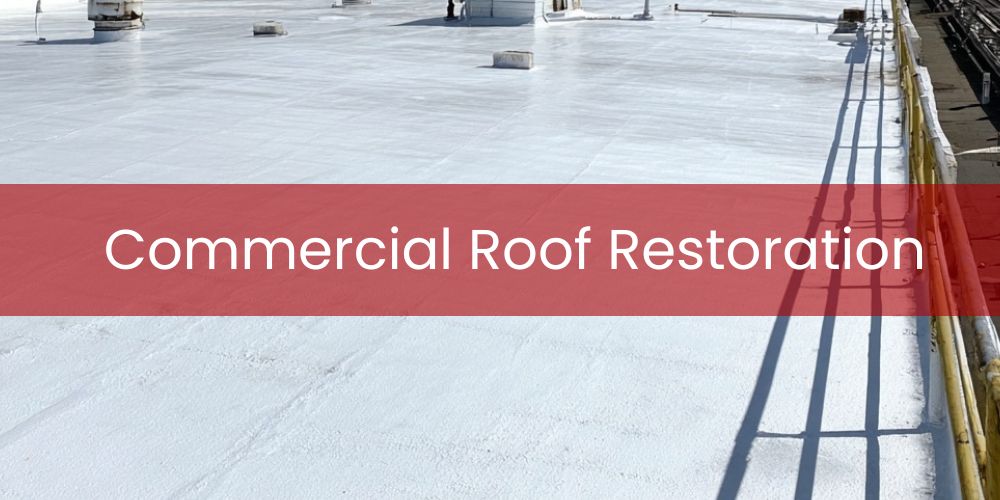
Commercial roof restoration is the process of extending the service life of an existing commercial roofing system by repairing deficiencies, reinforcing vulnerable areas, and applying protective restoration systems rather than performing a full tear-off. It is most effective when the roof structure and insulation remain sound, allowing performance, waterproofing, and energy efficiency to be improved at a significantly lower cost than replacement. Commercial Roofing Washington DC provides commercial roof restoration services throughout Washington DC.
For commercial property owners in Washington, DC, commercial roof restoration can be an excellent cost-saving option by extending the roof's life and improving building energy efficiency. Roof restoration involves repairing, cleaning, and applying a protective coating, preserving the existing structure without the need for expensive full replacements. Given DC's varied climate, frequent storms, and temperature fluctuations, restoration can also act as a preventive measure against leaks and structural damages. In Washington DC's humid subtropical climate, roof restoration helps maintain the integrity of commercial buildings by protecting them from moisture infiltration and reducing heat absorption. This approach not only guards against possible weather-induced damages but also enhances energy efficiency, potentially lowering cooling costs in the warmer months and contributing to a reduction in a building's overall environmental footprint.
For DC business owners and facility managers, exploring commercial roof restoration can offer significant cost benefits compared to full roof replacement while maintaining the building's structural integrity. In this blog, we'll thoroughly analyze the restoration process, evaluate its economic advantages, and provide guidance on implementing effective roof maintenance strategies suited for Washington, DC's unique climate challenges.
What Is Commercial Roof Restoration and How Does It Work in Washington DC?
Commercial roof restoration is a process used to extend the service life of an existing commercial roofing system in Washington DC without performing a full replacement, provided the roof structure and membrane are still fundamentally sound. In DC’s climate, where humidity, heavy rainfall, summer heat, and winter freeze–thaw cycles accelerate roof aging, restoration is often used to address widespread surface degradation before structural failure occurs. Unlike replacement, restoration focuses on correcting system weaknesses, improving waterproofing, and enhancing energy performance while minimizing disruption to building operations. When properly executed, roof restoration can delay replacement by 10 to 20 years while significantly reducing lifecycle costs.
- Roof Assessment and Moisture Evaluation
- Surface Preparation and Cleaning
- Targeted Repairs and Reinforcement
- Application of Restoration Coatings
- Post-Restoration Maintenance Planning
1. Roof Assessment and Moisture Evaluation
Roof assessment in Washington DC begins with a detailed evaluation of the entire roofing assembly, not just the surface membrane. This includes examining membrane condition, seam integrity, flashing transitions, drainage efficiency, and signs of historic or active moisture intrusion. DC’s climate presents a unique challenge because persistent humidity, frequent rainfall, and slow drying periods during fall and winter often allow moisture to remain trapped within insulation layers long after a leak has occurred. As a result, restoration assessments frequently incorporate infrared thermography, moisture meters, and selective core sampling to determine the extent and distribution of trapped moisture. Restoration is only viable when moisture intrusion is limited, insulation remains largely dry, and the roof deck shows no signs of structural compromise. This evaluation step is critical because applying a restoration system over a wet or deteriorated substrate in DC’s climate almost guarantees premature failure.
2. Surface Preparation and Cleaning
Surface preparation is a critical phase in roof restoration, particularly in Washington DC’s dense urban environment. Commercial roofs in the city accumulate airborne pollutants, vehicle exhaust residue, biological growth, and fine particulate matter that can interfere with coating adhesion. High humidity further encourages algae and mold growth, especially on roofs with partial shading or poor drainage. Thorough cleaning removes these contaminants and exposes defects that may not be visible beneath surface grime. This process often includes pressure washing, treatment with biocides, and drying verification before any materials are applied. Proper surface preparation is not cosmetic; it directly affects how well restoration coatings bond and perform under DC’s frequent rain events and temperature fluctuations. Inadequate cleaning is one of the most common reasons restoration systems fail prematurely.
3. Targeted Repairs and Reinforcement
Targeted repairs are performed to correct existing weaknesses before the roof is restored as a complete system. In Washington DC, these repairs commonly focus on seam reinforcement, flashing repairs at penetrations and parapet walls, correction of ponding areas, and replacement of localized sections of deteriorated membrane or insulation. DC’s seasonal thermal expansion and contraction place repeated stress on seams and transitions, while heavy rain events exploit even minor defects. Restoration is not intended to hide damage or “seal over” problems; it depends on stabilizing the roof so that the coating system performs as a continuous waterproof barrier. Addressing these vulnerabilities ensures that the restored roof behaves predictably under future weather stress rather than allowing existing defects to telegraph through the new system.
4. Application of Restoration Coatings
The application of restoration coatings is the defining step in the process and must be tailored to Washington DC’s environmental conditions. Coatings are selected based on their ability to resist UV exposure, accommodate thermal movement, tolerate standing water, and withstand prolonged moisture exposure. Silicone coatings are often used on roofs with ponding concerns, while acrylic or polyurethane systems may be selected for roofs with better drainage and specific energy performance goals. In DC’s hot summers, reflective coatings significantly reduce rooftop temperatures, helping mitigate thermal cycling and lowering cooling demand within the building. When properly applied at the correct thickness, restoration coatings create a seamless, monolithic waterproof surface that protects the underlying roof from further degradation while improving overall system resilience.
5. Post-Restoration Maintenance Planning
A commercial roof restoration in Washington DC is only successful if it is supported by a maintenance plan designed for the region’s climate realities. Restored roofs are engineered to be maintained, not ignored. Post-restoration maintenance typically includes scheduled inspections after major storm events, routine drainage system checks, and monitoring of high-stress areas such as seams, penetrations, and rooftop equipment zones. DC’s weather patterns mean that even restored roofs are subjected to frequent moisture exposure and thermal movement, making proactive maintenance essential. Periodic touch-ups or recoating of localized wear areas helps preserve the integrity of the restoration system and maximizes the extended service life gained through restoration. This approach allows building owners to delay full replacement responsibly rather than simply postponing inevitable failure.
Have a question about an upcoming project?
Why Should DC Property Owners Consider Roof Restoration Over Replacement?
Roof restoration is a viable alternative to full commercial roof replacement when an existing roofing system is still structurally sound but has begun to show age-related surface deterioration. In Washington DC, this distinction matters because many commercial roofs fail due to membrane wear, UV exposure, and moisture intrusion long before the underlying deck or insulation system requires replacement. Given the city’s humid summers, freeze–thaw winters, frequent rainfall, and dense urban construction, roof systems often degrade externally while remaining structurally serviceable beneath.
For DC property owners, roof replacement is not only a capital-intensive decision but also one that can involve permitting delays, operational disruption, tenant impact, and significant waste removal in a tightly regulated urban environment. Roof restoration allows owners to address performance issues such as leaks, energy loss, and surface degradation without tearing off the entire system, provided moisture intrusion is controlled and the roof assembly remains intact. When applied at the correct point in the roof’s lifecycle, restoration can extend service life, improve energy performance, and defer replacement for many years, making it a strategically important option rather than a short-term fix.
- Cost-Effectiveness: Restoration is generally cheaper than a complete roof replacement.
- Environmental Impact: Consumes fewer resources and generates less waste compared to replacement.
- Extended Lifespan: Enhances current roof durability and functionality for additional years.
- Minimal Disruption: Less intrusive process, causing minimal disruption to daily operations.
- Improved Energy Efficiency: Reflective coatings can enhance energy savings by reducing heat absorption.
1. Cost-Effectiveness: Restoration is generally cheaper than a complete roof replacement.
Cost-effectiveness refers to achieving meaningful performance improvements without incurring the full financial burden of a complete roof tear-off and replacement. In Washington DC, commercial roof replacement costs are often elevated due to higher labor rates, disposal fees, permitting requirements, and logistical constraints in dense urban environments. Roof restoration avoids many of these costs by retaining the existing roof assembly and addressing deterioration through targeted repairs and protective coatings. For DC property owners, this approach significantly reduces upfront capital expenditure while still extending roof service life, making restoration a financially strategic option when the underlying system remains viable.
2. Environmental Impact: Consumes fewer resources and generates less waste compared to replacement.
Environmental impact refers to the amount of material waste, resource consumption, and embodied carbon generated by roofing work. Full roof replacement in Washington DC typically involves removing and disposing of membranes, insulation, and sometimes decking, much of which cannot be recycled and ends up in landfills. Roof restoration minimizes this impact by preserving the existing roof structure and adding protective layers in place. For DC property owners operating under sustainability goals, green building standards, or ESG reporting requirements, restoration aligns more closely with environmental responsibility by reducing waste generation and lowering the overall carbon footprint of roofing work.
3. Extended Lifespan: Enhances current roof durability and functionality for additional years.
Extended lifespan refers to increasing the usable service life of an existing roofing system beyond its original expectancy. In Washington DC’s climate, commercial roofs often deteriorate due to UV exposure, thermal cycling, and moisture intrusion rather than complete structural failure. Roof restoration directly addresses these degradation mechanisms by sealing seams, reinforcing vulnerable areas, and applying coatings that protect against further UV and moisture damage. When insulation and decking remain sound, restoration can add ten to twenty years of additional service life, allowing property owners to delay full replacement until it is genuinely necessary.
4. Minimal Disruption: Less intrusive process, causing minimal disruption to daily operations.
Minimal disruption refers to completing roofing work without significantly interfering with building operations, occupants, or tenants. Full roof replacement in Washington DC frequently involves extensive tear-off, noise, debris handling, and access restrictions that can disrupt businesses, government facilities, or multifamily properties. Roof restoration is far less invasive, typically requiring surface preparation, localized repairs, and coating application without large-scale demolition. This makes restoration particularly advantageous for occupied commercial buildings where downtime, safety concerns, and tenant disruption must be kept to an absolute minimum.
5. Improved Energy Efficiency: Reflective coatings can enhance energy savings by reducing heat absorption.
Improved energy efficiency refers to reducing heat gain and thermal stress on a building through reflective and protective roof enhancements. Washington DC experiences hot, humid summers that place sustained demand on HVAC systems, especially in large commercial buildings. Roof restoration commonly includes reflective coatings that reduce solar heat absorption and lower rooftop surface temperatures. This decreases cooling loads, improves interior comfort, and can lead to measurable energy cost savings over time. These efficiency gains not only offset restoration costs but also support DC energy performance targets and long-term operational efficiency.
How Does Commercial Roof Restoration in Washington DC Reduce Costs and Extend Roof Service Life?
Commercial roof restoration in Washington DC reduces ownership costs and extends roof service life by addressing climate-driven deterioration before structural failure occurs. In DC, roofs are exposed to high humidity, frequent rainfall, summer heat, winter freeze thaw cycles, and urban pollutants that accelerate surface degradation long before the roof assembly itself becomes unsound. Restoration intervenes at this stage, preserving the existing roof system while correcting vulnerabilities that would otherwise lead to premature replacement.
- Lower Capital Expenditure Compared to Replacement
- Slowing Climate-Driven Material Degradation
- Preventing Insulation Saturation and Heat Loss
- Minimizing Operational Disruption and Downtime
- Enabling Predictable Maintenance Instead of Reactive Repairs
1. Lower Capital Expenditure Compared to Replacement
Lower capital expenditure through roof restoration comes from avoiding the most expensive components of full commercial roof replacement. In Washington DC, replacement costs are driven upward by prevailing union labor rates, strict permitting processes, disposal and landfill fees, traffic and staging constraints, and limited access in dense commercial corridors. Roof restoration bypasses these cost drivers by preserving the existing roof assembly when it remains structurally sound. Instead of removing and rebuilding the entire system, restoration focuses on reinforcing seams, correcting localized defects, and applying protective coatings that renew waterproofing and surface performance. This approach allows DC property owners to achieve substantial functional improvement while committing far less upfront capital, often reducing initial costs by a significant margin compared to full replacement.
2. Slowing Climate-Driven Material Degradation
Extending roof service life in Washington DC requires addressing the specific environmental forces that accelerate membrane failure. The region’s climate exposes commercial roofs to intense summer heat, prolonged UV radiation, high humidity, heavy rainfall, and repeated freeze thaw cycles in winter. These conditions cause membranes to lose elasticity, seams to fatigue, and surface materials to degrade prematurely. Roof restoration directly interrupts these processes by adding protective layers that reflect ultraviolet radiation, reduce surface temperature swings, and limit moisture absorption. By stabilizing the roof surface environment, restoration slows the chemical and mechanical aging of the membrane. This reduces the rate at which minor defects expand into large scale failure, effectively extending the functional lifespan of the roofing system.
3. Preventing Insulation Saturation and Heat Loss
Preventing insulation saturation is one of the most critical ways restoration reduces long-term costs in DC commercial buildings. Washington DC’s high humidity and slower winter drying cycles make roofs especially vulnerable to trapped moisture once water breaches the membrane. Saturated insulation loses its thermal resistance, increases energy consumption, and accelerates membrane breakdown from below. Roof restoration addresses this risk by sealing micro-cracks, reinforcing seams, and restoring flashing transitions that commonly allow moisture entry. By reestablishing a continuous waterproof barrier, restoration protects insulation from water infiltration. Keeping insulation dry preserves energy efficiency, stabilizes interior temperatures, and prevents the cascading costs associated with HVAC strain, mold risk, and interior moisture damage.
4. Minimizing Operational Disruption and Downtime
Reducing operational disruption is a major financial advantage of roof restoration for Washington DC commercial properties. Full roof replacement often requires extensive tear-off, debris handling, noise generation, and safety controls that disrupt tenants, employees, and building operations. In dense urban environments, these disruptions are amplified by access limitations and strict safety regulations. Roof restoration is significantly less invasive, typically performed with minimal tear-off and limited interior impact. Most restoration work occurs at the surface level, allowing buildings to remain occupied and operational throughout the process. For offices, government buildings, healthcare facilities, and multifamily properties, this continuity translates into avoided downtime, reduced tenant complaints, and lower indirect costs associated with business interruption.
5. Enabling Predictable Maintenance Instead of Reactive Repairs
Restoration extends roof service life by transforming roof management from reactive to planned. Before restoration, aging commercial roofs in DC often require frequent emergency repairs triggered by storms, leaks, or sudden failures. These reactive interventions are costly, disruptive, and unreliable. A restored roof presents a uniform, maintainable surface where wear patterns are visible and issues can be addressed early. In Washington DC’s storm-prone climate, this predictability is especially valuable. Scheduled inspections, targeted touch-ups, and periodic recoating of high-wear areas allow owners to control maintenance costs and avoid escalating repair cycles. This proactive approach delays replacement, reduces risk, and ensures the roof continues to perform reliably under seasonal stress.
Need Help With Commercial Roof Restoration In Washington DC?
If you already know your roof is aging and want to avoid the cost and disruption of replacement, suspect emerging issues but are unsure whether restoration is still viable, or simply want expert guidance to make the right long-term decision, Commercial Roofing Washington DC can help. We work with property owners, facility managers, and asset planners to assess roof condition accurately, determine whether restoration is appropriate, and explain options clearly without pressure. Whether you need to act now, want to confirm the smartest path forward, or are planning strategically for the years ahead, Commercial Roofing Washington DC delivers restoration solutions built around clarity, performance, and long-term value.