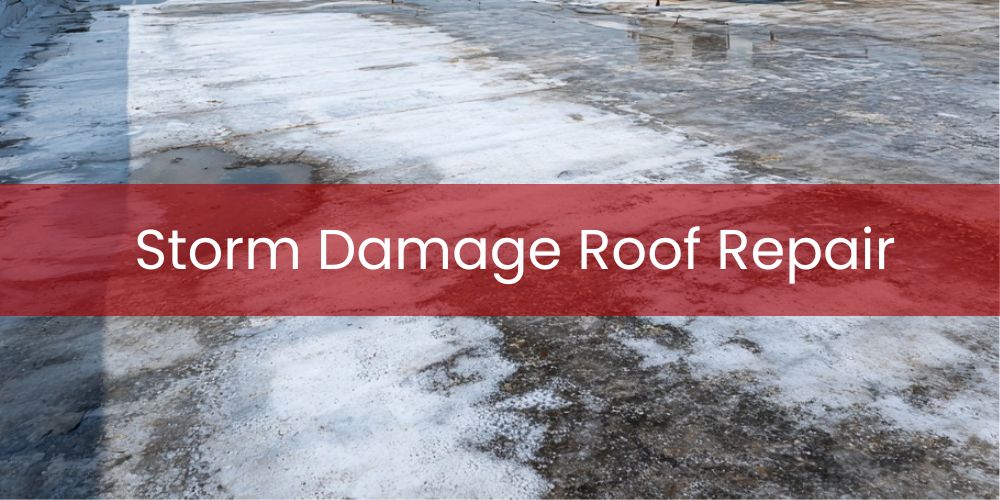
Storm damage roof repair focuses on identifying and correcting roofing failures caused by high winds, heavy rainfall, hail, and wind-driven debris on commercial buildings. In Washington DC, repeated storms, freeze–thaw cycles, and urban wind exposure often damage membranes, seams, flashing, and rooftop penetrations, requiring fast, professional intervention to prevent escalating water intrusion and structural issues. Commercial Roofing Washington DC provides storm damage roof repair services for commercial buildings throughout Washington DC.
Storm damage roof repair in Washington DC involves identifying and correcting failures in commercial roofing systems caused by high winds, heavy rainfall, hail, and wind-driven debris. In the DC region, storms frequently compromise membranes, flashing assemblies, rooftop penetrations, drainage systems, and edge details rather than residential components. These failures allow water intrusion that can saturate insulation, stress roof decks, and disrupt building operations if not addressed quickly. Prompt, professional repair is critical to prevent secondary damage such as interior leaks, mold growth, electrical risk, and accelerated structural deterioration. For commercial property owners and facility managers in Washington DC, understanding how storms affect flat and low-slope roofing systems is essential for protecting assets and maintaining compliance. Effective storm damage response includes post-event inspections, moisture evaluation, targeted repairs, and documentation for insurance or risk management purposes. This guide explores the most common forms of storm damage affecting commercial roofs in DC, outlines proper repair and recovery procedures, and explains how proactive maintenance and reinforcement strategies can reduce exposure to future storm events.
What Are the Common Types of Commercial Roof Damage Caused by Storms in Washington DC?
Storm damage to commercial roofs in Washington DC typically results from high winds, heavy rainfall, hail events, and wind-borne debris associated with severe weather systems affecting the region. Unlike residential roofing, commercial roofing systems rely on membranes, flashings, drainage components, and structural decking rather than shingles, making failure modes different and often less visible. Understanding how storms damage commercial roofs allows property owners and facility managers to respond quickly, limit water intrusion, and prevent minor damage from escalating into costly structural or operational issues.
- Wind Uplift Damage
- Water Intrusion and Leak Formation
- Hail Impact Damage
- Debris Impact and Punctures
- Flashing and Penetration Failures
1. Wind Uplift Damage
Wind uplift damage occurs when high storm winds create negative pressure that lifts roofing components from the roof surface. In Washington DC, strong storm systems frequently generate uplift forces along roof edges, corners, and parapet walls, where commercial roofing systems are most vulnerable. These forces stress fasteners, perimeter metal, and membrane attachment points, often causing membrane billowing, seam separation, or edge securement failure. Even when the membrane is not visibly torn, uplift can break adhesive bonds or loosen mechanical attachments, creating hidden vulnerabilities that allow water intrusion during subsequent rain events. This type of damage is especially common on large, low-slope commercial roofs with extensive perimeter exposure.
2. Water Intrusion and Leak Formation
Water intrusion refers to stormwater penetrating the roofing system through compromised seams, penetrations, or transitions. In Washington DC, heavy rainfall combined with slow drainage and high humidity increases the likelihood that stormwater will exploit even minor weaknesses. On low-slope commercial roofs, water often migrates laterally beneath the membrane before appearing inside the building, meaning interior leaks may emerge far from the actual entry point. This delayed manifestation makes storm-related leaks difficult to diagnose without professional inspection. Repeated storm exposure without proper repair can lead to insulation saturation, mold development, and progressive deck deterioration.
3. Hail Impact Damage
Hail impact damage occurs when hailstones strike roofing materials with enough force to compromise their surface integrity. In DC, hailstorms can damage commercial roofing membranes by causing bruising, cracking, or granule displacement on systems such as modified bitumen or coated membranes. While hail damage does not always result in immediate leaks, it weakens the membrane’s protective layers and accelerates aging under UV exposure and thermal cycling. Over time, these impact zones become failure points where cracking, blistering, or seam breakdown occurs. Unaddressed hail damage often shortens roof service life and increases long-term replacement risk.
4. Debris Impact and Punctures
Debris impact damage results from wind-driven objects striking and penetrating the roofing system during storms. In Washington DC’s dense urban environment, storms frequently dislodge tree limbs, rooftop equipment components, unsecured signage, or construction materials. When debris punctures a commercial roof membrane, even small openings can allow significant water intrusion during repeated rain events. Because moisture can spread beneath the membrane, a single puncture may lead to widespread insulation damage if not repaired promptly. Debris impacts are a common cause of sudden post-storm leaks on otherwise well-maintained commercial roofs.
5. Flashing and Penetration Failures
Flashing and penetration failures occur when storm forces compromise the seals around roof transitions, penetrations, and vertical walls. Commercial roofs in Washington DC contain numerous penetrations for HVAC units, vents, conduits, skylights, and parapet transitions, all of which rely on properly secured flashing. High winds can loosen metal flashings, while heavy rain creates pressure that forces water into separated seams. Once flashing fails, water bypasses the roof surface entirely and enters the building at vulnerable joints. These failures are among the most common sources of storm-related commercial roof leaks in DC and often require immediate professional repair to prevent interior damage.
Have a question about an upcoming project?
How Do You Assess the Extent of Storm Roof Damage To A Commercial Roof in Washington DC?
Assessing storm roof damage to a commercial roof in Washington DC involves systematically evaluating the roofing system for storm impact, moisture intrusion, material failure, and structural risk specific to the region’s climate and building conditions. Because DC commercial roofs are typically flat or low-slope systems exposed to heavy rainfall, humidity, and seasonal temperature swings, damage is often concealed beneath the membrane and not immediately visible. A proper assessment focuses on both surface conditions and underlying system performance to determine whether repairs, restoration, or replacement are required.
- Engage a Licensed Commercial Roofing Contractor for a System-Level Evaluation
- Perform a Surface Inspection of the Roof Membrane and Perimeter Details
- Inspect Interior Spaces for Signs of Active or Hidden Moisture Intrusion
- Evaluate Drainage Performance and Ponding Risk Under DC Rainfall Conditions
- Consider Roof Age, Material Type, and Remaining Service Life
1. Engage a Licensed Commercial Roofing Contractor for a System-Level Evaluation
A system-level evaluation is a comprehensive assessment of all components that make up a commercial roofing assembly, not just the visible surface. In Washington DC, licensed commercial roofing contractors evaluate membrane condition, seam integrity, perimeter attachment, flashing transitions, drainage behavior, and structural interfaces that are commonly stressed by regional weather patterns. Because DC’s humidity and slower winter drying often trap moisture below the membrane, contractors frequently use infrared imaging, moisture meters, or core sampling to detect insulation saturation that is invisible from the surface. This evaluation determines whether damage is isolated and repairable or systemic and cost-prohibitive, forming the foundation for accurate budgeting and decision-making.
2. Perform a Surface Inspection of the Roof Membrane and Perimeter Details
A surface inspection involves physically examining the exposed roofing membrane and all perimeter and penetration details for signs of failure. On Washington DC commercial roofs, storm damage often concentrates at edges, parapets, termination bars, and expansion joints where wind uplift forces are highest. Inspectors look for seam separation, punctures, blistering, coating erosion, and compromised edge securement that may not yet be leaking but represent elevated risk. Flashing at rooftop equipment, drains, and wall transitions receives particular attention, as these locations account for a disproportionate share of post-storm leak events in DC buildings.
3. Inspect Interior Spaces for Signs of Active or Hidden Moisture Intrusion
Interior inspection is the process of identifying evidence of water intrusion within occupied spaces that may not align directly with exterior damage. On commercial roofing systems, water often travels laterally across insulation before appearing inside the building, especially on low-slope roofs common throughout Washington DC. Inspectors look for ceiling stains, bubbling finishes, elevated humidity, corrosion around penetrations, or persistent musty odors that indicate trapped moisture. These interior indicators confirm whether roof damage is actively affecting building operations, tenant comfort, or indoor air quality.
4. Evaluate Drainage Performance and Ponding Risk Under DC Rainfall Conditions
Drainage evaluation assesses whether the roof can effectively shed water during heavy rainfall events typical of the DC region. This includes inspecting drains, scuppers, overflow provisions, and roof slope for blockages, undersized components, or long-term ponding indicators. In Washington DC, where intense storms can drop significant rainfall in short periods, inadequate drainage dramatically increases hydrostatic pressure on seams and penetrations. Identifying drainage deficiencies helps determine whether observed damage is being caused or accelerated by water retention rather than isolated membrane defects.
5. Consider Roof Age, Material Type, and Remaining Service Life
Service life assessment evaluates whether the roof’s age and material condition justify repair, restoration, or replacement. In Washington DC, commercial roofs often age faster than their nominal lifespan due to UV exposure, temperature cycling, and chronic moisture stress. Inspectors assess membrane flexibility, adhesion, insulation condition, and the frequency of prior repairs to determine whether additional work will meaningfully extend performance. This step prevents sunk-cost repairs on roofs that are structurally or materially beyond their effective service life and ensures long-term decisions are financially and operationally sound.
What Are the Best Strategies for Repairing and Recovering Commercial Roofs After a Storm in Washington DC?
Repairing and recovering a commercial roof after a storm in Washington DC requires a structured, system-level approach that accounts for wind uplift, heavy rainfall, ponding conditions, and urban access constraints. Storm events in DC frequently cause hidden damage that escalates if not addressed methodically. Effective recovery prioritizes stabilizing the roof, preventing secondary water intrusion, and restoring long-term performance rather than applying temporary fixes.
- Conduct a Comprehensive Post-Storm Commercial Roof Inspection in Washington DC
- Prioritize Emergency Stabilization and Water Ingress Control
- Select Repair Materials Suited to Washington DC Storm Conditions
- Engage Experienced Commercial Roofing Contractors for Storm Recovery
- Implement a Post-Repair Maintenance and Monitoring Plan
1. Conduct a Comprehensive Post-Storm Commercial Roof Inspection
A post-storm commercial roof inspection is a systematic evaluation of the entire roofing system to identify visible and concealed damage caused by severe weather. In Washington DC, storm damage frequently concentrates at perimeter edges, parapets, expansion joints, rooftop penetrations, and drainage points due to wind uplift and pressure differentials created by dense urban wind patterns. Beyond visual checks, professional inspections often incorporate infrared moisture surveys, capacitance testing, or selective core sampling to detect trapped moisture beneath intact membranes. This is particularly important in DC, where humidity and limited sunlight during cooler months slow drying and allow hidden moisture to persist. A comprehensive inspection establishes whether damage is cosmetic, localized, or system-wide, forming the foundation for accurate repair planning, insurance documentation, and cost control.
2. Stabilize Active Leaks and High-Risk Failure Points Immediately
Stabilizing urgent failure points means stopping active water intrusion and preventing additional damage before conditions worsen. After DC storm events, high-risk areas commonly include displaced flashing at HVAC units, lifted membrane seams, punctures from wind-borne debris, and overwhelmed drainage assemblies. Because Washington DC often experiences clustered storm systems, roofs may be exposed to additional rainfall before drying or repairs can be completed. Temporary waterproofing measures such as emergency sealants, reinforced membrane patches, or temporary drain protection may be required to protect interiors and insulation. Immediate stabilization reduces secondary damage, limits business interruption, and prevents moisture from spreading laterally beneath the roof system, which significantly increases repair scope and cost if left unchecked.
3. Repair Storm-Damaged Components Using Materials Rated for DC Conditions
Repairing storm-damaged components requires using materials that are compatible with the existing roof system and rated for Washington DC’s environmental stresses. DC roofs must withstand high rainfall volumes, seasonal snow loads, urban wind uplift, and repeated thermal expansion and contraction. Repairs should restore original performance characteristics, including wind resistance, waterproofing continuity, and thermal integrity, rather than functioning as temporary patches. This includes using manufacturer-approved membranes, reinforced flashing assemblies, corrosion-resistant fasteners, and sealants designed for prolonged moisture exposure. Inadequate or mismatched materials often fail during the next storm cycle, creating recurring leaks and accelerating system degradation. Proper material selection ensures storm repairs are durable, code-compliant, and integrated into the roof’s long-term performance strategy.
4. Engage Commercial Roofing Contractors Experienced in DC Storm Recovery
Engaging experienced commercial roofing contractors means working with professionals who understand Washington DC’s regulatory environment, building stock, and storm-related failure patterns. Storm recovery in DC frequently involves coordination with insurance adjusters, property managers, municipal inspectors, and occupied tenants, all within tight logistical constraints. Contractors with DC-specific experience are better equipped to document damage accurately for insurance claims, navigate permitting requirements, and sequence repairs efficiently in dense urban settings. They also understand common local failure points, such as parapet transitions and older deck assemblies found in DC commercial buildings. This expertise reduces delays, avoids compliance issues, and ensures repairs meet both technical and administrative requirements.
5. Implement a Post-Storm Maintenance and Monitoring Plan
A post-storm maintenance and monitoring plan is a structured approach to tracking roof performance after repairs are completed. In Washington DC, secondary failures often emerge days or weeks after a storm as trapped moisture migrates, temperatures fluctuate, or previously stressed components continue to move. Follow-up inspections after subsequent rain events help confirm repair effectiveness and identify delayed seam separation, flashing movement, or drainage issues. A proper monitoring plan includes scheduled inspections, targeted reinforcement of high-stress zones, and ongoing drainage maintenance. This proactive approach prevents minor storm damage from evolving into system-wide failure and extends the roof’s service life while stabilizing long-term maintenance costs.
Need Help With Storm Damage Roof Repair On Commercial Buildings In Washington DC?
If your building has suffered visible storm damage, you are dealing with post-storm leaks, or you are unsure whether recent weather has compromised your roof, Commercial Roofing Washington DC can help. We work with property owners, facility managers, and asset stakeholders who need immediate repairs, those who want to assess storm impact before problems surface, and those who simply need expert guidance after severe weather. From emergency stabilization to documented inspections and long-term repair planning, Commercial Roofing Washington DC delivers clear assessments, code-compliant repairs, and reliable solutions that protect your building and restore confidence after the storm.